
2023-2025, The Crown Estate and ABPmer, Evaluating the Transferability of Marine Mammal Data Between Tidal Stream Energy Developments (2025)
Summary
Data & downloads
Reports
Related Pages
 Series
2026, The Partnership for Research in Marine Renewable Energy (PRIMaRE), The Crown Estate & Supergen Offshore Renewable Energy Hub, 50 Years of Offshore Renewables for the UK
Over the last 25 years, the UK offshore renewable energy sector has moved from early demonstration projects to a core part of the energy system. The next phase of growth will require more than individual technological advances: it will require coordinated action across skills, infrastructure, data, investment, environmental stewardship and decision-making. A workshop was held as part of the 13th PRIMaRE Conference, which invited participants to explore what the next 25 years could look like. Working in lifecycle groups, participants identified the most important challenges and opportunities facing offshore renewable energy, then developed practical solution pathways for priority areas. Four cross-cutting messages emerged. First, the sector needs a broader and more visible skills pipeline, spanning schools, colleges, universities and career changers. Second, scaled deployment depends on enabling infrastructure, including ports, grid, vessels and supply chains. Third, data, digital tools and artificial intelligence could improve forecasting, maintenance, monitoring and operational performance if supported by trusted data access and appropriate skills. Finally, end-of-life decisions need to be planned as part of a circular, nature-positive lifecycle, rather than addressed only when assets reach decommissioning. This workshop was hosted by The Crown Estate, Supergen Offshore Renewable Energy Hub and Loughborough University. It was facilitated by Mindfully Wired.
 Series
2026, ABPmer and The Crown Estate, The Crown Estate Research, Data Transferability in Tidal Stream Consenting: Practical Tools for Faster, Smarter Decisions
A workshop was held by The Crown Estate, supported by ABPmer, at the Marine Energy Wales (MEW) conference on 28 April 2026. The workshop aimed to test the usability and practicality of using the data transferability matrix with a diverse range of stakeholders. A key objective of the workshop was to allow participants to share views and explore how transferability judgements might vary across individuals and stakeholder groups, and identify where additional guidance or future refinement of the matrix might be beneficial. The transferability matrix is designed as a structured tool to assess how existing environmental data can be applied to new tidal stream projects, to accelerate consenting. It aims to support discussion, helping users identify where evidence may be useful, where uncertainty remains, and where additional data may be required. Final judgements rely on professional interpretation and are typically resolved through discussion, with the matrix providing a structured basis to support and inform those conversations.
 Series
2025, TCE, The Crown Estate Research, Pembrokeshire Seascape Sensitivity Assessment and Siting and Design Guidance for Aquaculture
The Crown Estate, Natural Resources Wales, and Pembrokeshire Coast National Park Authority have recently collaborated to create the ‘Pembrokeshire seascape sensitivity assessment and siting and design guidance for aquaculture’. The purpose of this guidance is to help direct aquaculture developments towards less sensitive areas of the Pembrokeshire seascape and to ensure that proposals are sited and designed in a way that respects the visual and seascape sensitivities of individual locations. The overarching aim is to support the successful consenting, operation, and growth of marine aquaculture in this nationally important and sensitive seascape, while protecting and enhancing its special characteristics and qualities.
 Series
2025, Western Gateway Partnership, Severn Estuary Commission, Final Recommendations
The Severn Estuary Commission was established in March 2024 by the Western Gateway Partnership to assess the feasibility of tidal range energy generation in the Severn Estuary. After a year’s engagement with more than 500 experts and stakeholders with the support of specialist consultancies, the Severn Estuary Commission has concluded that development of tidal range energy in the Severn Estuary is feasible. This collection of reports provides key insights into the Commission’s findings. The main report outlines the Commission’s deliberations and recommendations, while supporting documents offer in-depth analysis on specific areas, including engineering considerations, energy system impacts, economic assessments, and funding and financing models. These reports aim to provide a clear evidence base for policymakers, industry leaders, and the public, informing the next steps in exploring tidal range energy as part of the UK’s transition to low-carbon, secure, and reliable power generation.
 Series
2024-2025, The Crown Estate and ABPmer, Tidal Stream Energy Project, Collision Risk Data and Evidence Summary
This report was prepared by the Data and Insights Team at The Crown Estate and ABPmer, to summarise the available data collected from tidal stream energy sites and to assess the conclusions regarding their impact on marine mammals. This report evaluates the methods used to quantify risk, such as identifying potential monitoring limitations, with the aim of supporting the consenting process by providing further clarity on benefits and limitations to environmental monitoring methods used at different project site locations. To read the associated Transferability Framework and Matrix Report please follow: https://www.marinedataexchange.co.uk/details/TCE-4271
 Series
2024, University of Exeter, The Crown Estate Research, The Social Impact of Marine Developments
The University of Exeter has completed a scoping review of evidence on the social impacts of marine sectors on coastal communities, on behalf of The Crown Estate. The review was led by Dr Pamela Buchan, an interdisciplinary marine scientist in the University of Exeter Geography Department and ACCESS Network (https://accessnetwork.uk/) Leadership College Fellow. Dr Buchan’s study finds that marine development in the UK and internationally is not currently sufficiently considering the wide range of social impacts for coastal communities. Research is dominated by efforts to generate acceptance of developments, whilst existing practices are focused on job creation, skills development, and grant giving through community benefit schemes. This is strongly influenced by a lack of regulation that requires offshore sectors to consider, evidence, and monitor social impacts at all stages of marine development, with practices such as Environmental Impact Assessment often scoping out coastal community impacts for activities taking place at sea. The report gives a substantial set of recommendations aimed at research, specific marine sectors, and company level actions and regulation. It calls for systematic review of social impact assessment across marine sectors.
 Series
2023, The Crown Estate, The Crown Estate Research, Community Perceptions of Offshore Developments
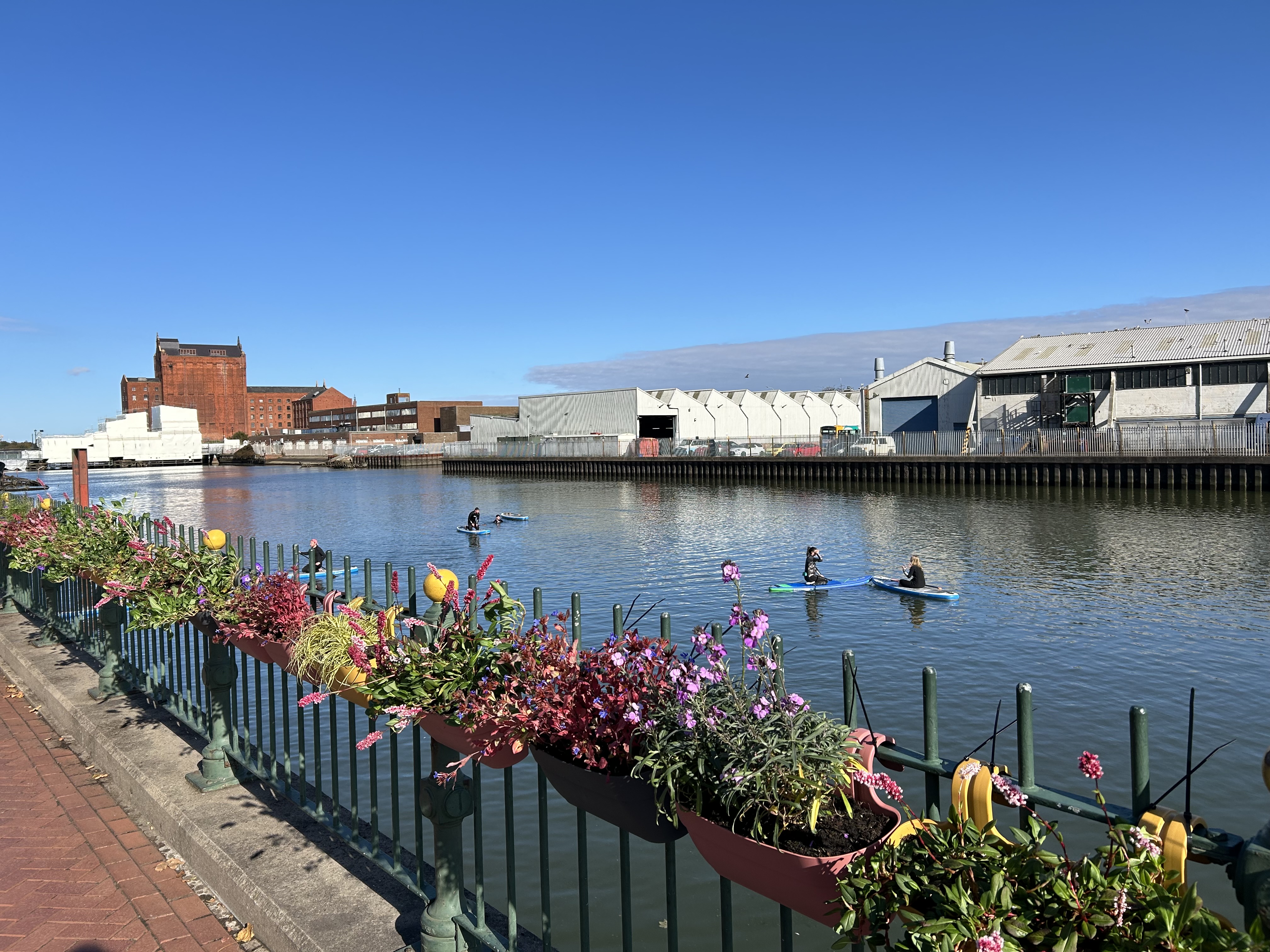
In 2023, The Crown Estate commissioned surveys focusing on community perceptions of offshore developments in coastal regions. The surveys were conducted by Opinium and were completed in June and November 2023. This results report has been produced so that findings may be shared and utilised across the wider community. The aim of this project is to enhance our understanding of how coastal communities around the UK view and engage with offshore wind development. The project commissioned two surveys, the first of which was carried out in Pembrokeshire Docks, Grimsby, Falmouth, and Holyhead and the second in Kent. The data and evidence from this survey give insights into coastal communities’ awareness, knowledge, attitudes, and behaviours pertaining to the marine environment and offshore developments. This information was gathered to inform The Crown Estate’s understanding of coastal communities’ core areas of interest, concern, and potential knowledge gaps, so that strategic outreach and education efforts related to offshore developments could be tailored accordingly. This results report outlines the key findings from the Evidence Project.
 Series
2023-2024, British Geological Survey, The Crown Estate Research, Geotechnical Data Standardisation Project
The Marine Data Exchange currently holds over 100 geotechnical surveys from more than 30 offshore renewables projects. Geotechnical surveys are vital to the development of a project. For an offshore wind farm, geotechnical data should provide the necessary geological information and physical properties of the shallow soils to inform detailed design and installation for turbine foundations and export and inter-array cables. Whilst the geotechnical data are currently held in disparate datasets on the Marine Data Exchange, the partnership approach with the British Geological Survey (BGS) aims to develop a method for bringing the historic datasets together into one standardised dataset where possible, and will work with industry to develop a consistent and standardised approach for the future delivery of geotechnical data. The British Geological Survey (BGS) is a world-leading geological survey and global geoscience organisation, focused on public-good science for government and research to understand earth and environmental processes. Improving data accessibility and interoperability is vital to improving our understanding of the marine environment and sub-seabed, and is key to the future of sustainable offshore development and asset management. Standardising datasets encourages and facilitates the integration of data into future studies. This can not only be for future commercial development-focused studies, but also for scientific research, including environmental research, to help build a more informed understanding about our precious marine environment. Geotechnical series made publicly available on the Marine Data Exchange up until 2022 (ranging from surveys conducted between 2002 and from 2016) have been reviewed as part of the BGS Geotechnical Data project, to drive insight from the data to help understand its standardisation potential and to ensure that recommendations from the most recent datasets can be taken forward.
 Series
2022, The Crown Estate , The Crown Estate Research, Using Marine Industry Data for UK Marine Assessment and Reporting (Scoping Report)
In response to the intensifying global climate crisis, the British government has arrived at its “Net Zero Strategy: Build Back Greener”, which sets out strategic goals of decarbonising all sectors of the UK economy to achieve net zero carbon emissions by 2050. As part of these goals, the UK government has set a target of achieving 50GW of offshore wind by 2030. However, nations worldwide are facing twin crises of both climate change and biodiversity loss. The UK’s 25 Year Environment Plan (2018) outlines a natural capital approach to the protection and management of the marine environment that centres on comprehensive and reliable data. In addition, the United Nations Convention on Biological Diversity (CBD) calls on governments worldwide to conserve and protect biodiversity, and outlines commitments such as identifying important components of biological diversity and the importance of high-level biodiversity reporting and assessment. Without proper management and monitoring, increasing offshore activities could have adverse effects on marine biodiversity. However, as marine sectors expand so does the spatial footprint of survey data collected by offshore industries. Industry data can therefore help to inform monitoring programmes put in place as part of the UK Marine Strategy (2012), which aims to achieve good environmental status (GES) in British Seas. The Marine Data Exchange (MDE) is the world’s largest database of offshore survey data, research and evidence, and includes over 2,600 survey campaigns collated from feasibility through to decommissioning studies. Survey data includes information collected from the offshore wind and renewables industries, in addition to marine aggregates and dredging. The data collected as part of these surveys could be re-used to help inform GES reporting, providing an improved evidence base for decision making and regional assessment, and could play a critical role in helping the UK in achieving more comprehensive marine reporting. This study outlines potential uses of marine industry data for marine assessment and reporting. Existing studies that explore the use of industry data were examined, including projects such as OneBenthic, The Joint Cetacean Data Programme and the Office for National Statistic's Marine Natural Capital Accounts. The existing studies were reviewed to explore whether UK Marine Strategy descriptors were included and whether industry data had been utilised. There were notable gaps in the number of studies which had explored industry data containing information regarding UK Marine Strategy Descriptors, such as “commercial fish”, “contaminants”, “hydrography” and “non-indigenous species”. An initial search of the industry data that is made available through the MDE produced a large range of surveys that contained key words relevant to important UK marine assessments (such as Good Environmental Status (GES) reporting), highlighting potentially useful data for inclusion in said assessments. To explore how data collected by offshore industries can support data aggregation for marine monitoring and assessment, this study recommends five future pilot study themes, including searching industry data held on the MDE for: >Commercial and non-commercial fish species >UK Marine Strategy (GES) and 25 Year Environment Plan indicators >Water quality surveys and habitat mapping data to inform natural capital accounting >Trends in data collected from offshore wind postconstruction monitoring surveys >And to explore how discoverable and accessible information is within surveys and reports The study concludes that there are several opportunities where inclusion of industry data in marine assessments and reporting could contribute to the development of natural capital and ecosystem service approaches, helping the UK in progressing towards its aim of ecologically diverse and productive oceans. If you have any feedback or comments on the report, please get in touch: Mde@thecrownestate.co.uk
2022, The Crown Estate, The Crown Estate Research, Fisheries Evidence Project Summary Report
The Fisheries Evidence project was conducted in 2022 by The Crown Estate to enhance our understanding of the spatial distribution of fishing effort in English, Welsh and Northern Irish waters (EWNI) and the scale and quality of the associated data. The project aimed to provide an overview of the UK fishing industry and included a review of publicly available fisheries data and evidence. Key datasets were identified, informing The Crown Estate’s understanding of core fishing grounds and potential planning constraints in relation to existing and future areas of fishing intensity, so that strategic planning related risks may be considered at an early stage in the development process. Key stakeholders were included within discussions throughout the project, including the Marine Management Organisation (MMO), Cefas and fishing industry representatives. The following summary report outlines the evidence gaps identified and recommendations of the Fisheries Evidence project. Should you wish to contact the authors of this report, please contact: mde@thecrownestate.co.uk
 Series
2022-2023, WSP, The Crown Estate Research, Whole life carbon assessment and the circular economy in different marine industries
The report, commissioned by The Crown Estate, reviews the current state of understanding and implementation of whole life carbon assessments and circular economy practices across the marine industry. Based on research conducted by WSP in 2022, it summarises a wide range of references, stakeholder insights, case studies and links to good practice, and identifies legislative tools, initiatives, research programmes, assessment tools, key knowledge gaps and opportunities for improvement.
Series2021-2025, The Crown Estate, The Crown Estate Research, Cable Route Identification & Leasing Guidelines
This document provides guidance for developers when preparing their application to The Crown Estate for a Cable Route linked to an Offshore Renewable Energy Installation (OREI). The guidance has been updated for Floating Offshore Wind Leasing Round 5 whilst remaining relevant to Round 4 and Extension projects. The guidance is subject to period reviews to ensure relevancy for the broader transmission sector in the context of The Crown Estate’s whole of seabed approach, seabed routemap and strategic objectives. The purpose of the guidance is to make developers aware of The Crown Estate’s requirements in granting property rights for Cable Routes and the detail of Transmission Asset Infrastructure that must be provided for approval. This guidance outlines the process to be followed regarding Cable Route application, assessment and approval (or rejection), introducing a Cable Route Identification and Approval (CRIA) submission process. The guidance is generic and therefore suitable for all Transmission Asset Infrastructure in relation to OREIs, although the terms “wind farms”, "Leasing Round 4", "Leasing Round 5" and "Extensions Leasing Round" are referred to from time to time.